

Blogs
When PEX Fails: Understanding Boiler Pressure Issues in Edmonton
Author: James Tingey
February 19, 2026

A common commercial boiler issue in Edmonton high‑rises is misaligned pressure and temperature settings, especially in top‑fed systems, where increased winter boiler temperatures combined with high static pressure can overstress PEX piping.
In tall buildings, top‑fed hydronic systems naturally create high static pressures on lower floors. When winter heat demands push boiler temperatures to around 200°F, the resulting pressure‑temperature combination can exceed PEX limits, causing blistering and material stress. Proper alignment of makeup‑water pressure and temperature settings is critical.
Commercial Boiler & Hydronic Heating Insights from Hydro-Flo – Edmonton
PEX piping is widely used in modern hydronic heating systems across Edmonton commercial buildings. It’s flexible, efficient, and rated for high temperatures.
But like any material, it has operating limits.
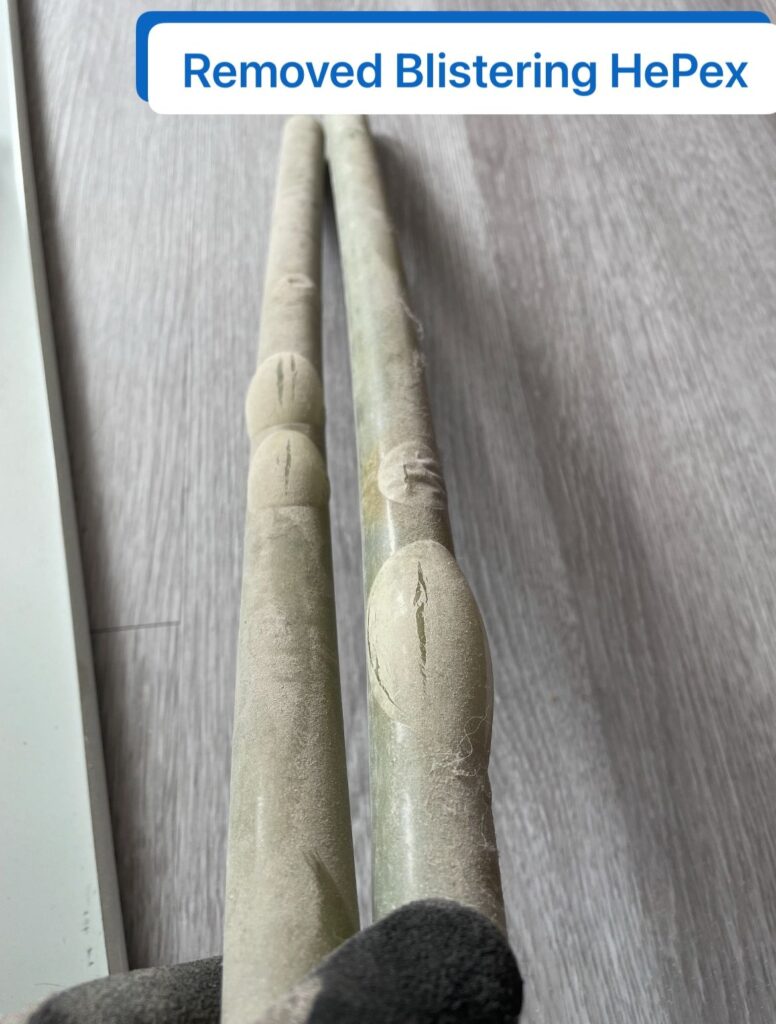
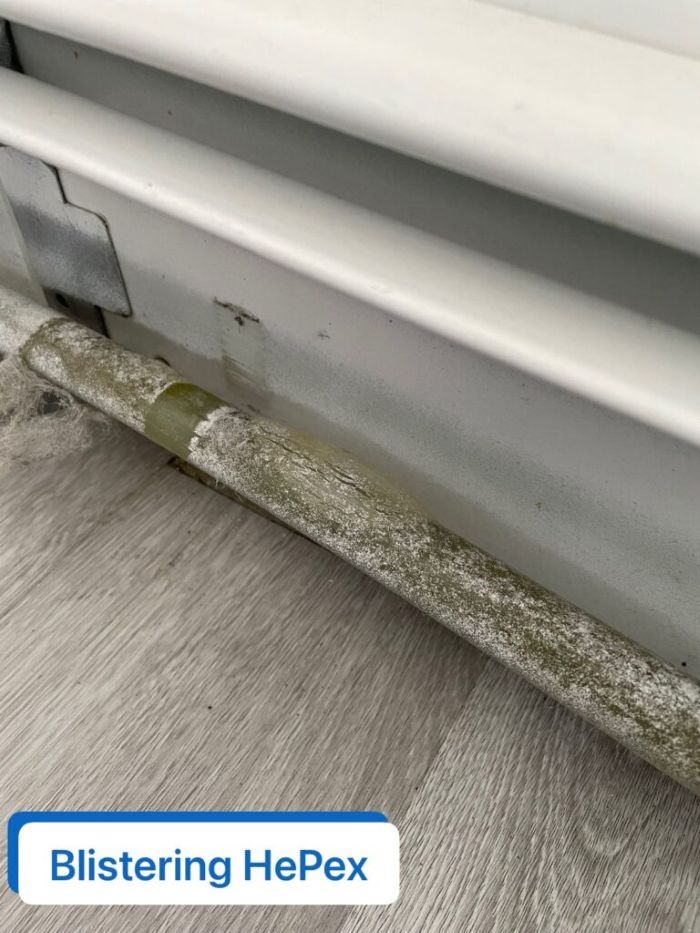
Recently, Hydro-Flo was called to assess an 18-storey commercial building in Edmonton experiencing visible “blistering” on its hydronic HePex piping. What we discovered highlights a common issue in high-rise boiler systems — improper pressure and temperature alignment.
For building owners and property managers, this is more than a technical detail. It’s a risk management issue.
The Building: 18 Storeys with a Top-Fed Boiler System
This Edmonton high-rise operates with a top-fed hydronic boiler system, meaning heated water is pumped to the rooftop mechanical room and gravity assists distribution downward.
In a top-fed system:
- Pressure increases as you move down the building.
- The lowest floors experience the highest static pressure.
- Makeup water pressure must be carefully calculated.
The site maintenance team had the makeup water set at 20 PSI.
At 18 storeys (19 including rooftop mechanical), this resulted in approximately:
115 PSI at the base of the building
That pressure alone wasn’t the immediate issue — but it became critical when combined with winter temperature adjustments.
The Building: 18 Storeys with a Top-Fed Boiler System
This Edmonton high-rise operates with a top-fed hydronic boiler system, meaning heated water is pumped to the rooftop mechanical room and gravity assists distribution downward.
In a top-fed system:
- Pressure increases as you move down the building.
- The lowest floors experience the highest static pressure.
- Makeup water pressure must be carefully calculated.
The site maintenance team had the makeup water set at 20 PSI.
At 18 storeys (19 including rooftop mechanical), this resulted in approximately:
115 PSI at the base of the building
That pressure alone wasn’t the immediate issue — but it became critical when combined with winter temperature adjustments.
The Winter Setpoint Change That Triggered Material Stress
During extreme Edmonton cold snaps (-30°C and below), tenants reported insufficient heating.
To compensate, boiler temperatures were increased to 200°F.
Here’s the problem:
Wirsbo HePex ratings:
- 200°F → Maximum 80 PSI (extended periods)
- 180°F → Maximum 100 PSI
- Lower temperatures allow higher pressure tolerance
The building was operating at:
- 200°F
- Approximately 115 PSI at lower floors

That combination exceeded recommended manufacturer operating thresholds.
The result?
Visible blistering and stress formation in lower-floor zone PEX.
No rupture — yet.
But the system was trending toward premature failure.
Why Pressure Management in High-Rise Buildings Is Critical
In commercial high-rise boiler systems, pressure strategy must match system design.
Bottom-Fed vs. Top-Fed Systems
Older bottom-fed systems require higher base pressure to overcome gravity.
A common rule of thumb:
Floors × 5 PSI + 5 PSI
But in a top-fed system, gravity works in your favor.
Running bottom-fed pressure calculations on a top-fed system can unintentionally create excessive base pressure. This is a common oversight in commercial mechanical operations.
How Temperature and Pressure Work Together in Hydronic Heating Systems
As temperature increases, PEX pressure tolerance decreases.
That extra:
- 15 PSI
- 20°F
Was enough to initiate material fatigue.
In commercial HVAC and boiler systems, small setpoint changes can have structural consequences over time.
The Risk to Edmonton Building Owners & Property Managers
Improper pressure and temperature management can result in:
- Premature piping degradation
- Emergency water damage
- Tenant displacement
- Insurance complications
- Voided manufacturer warranties
- Major capital replacement costs
What started as comfort complaints during winter became a potential asset liability.
For commercial property owners in Edmonton, this is where proactive mechanical oversight matters.
Signs Your High-Rise Boiler System Needs Review
If you manage a commercial building, office tower, condo high-rise, or mixed-use property, watch for:
- Increased boiler temperature setpoints in winter
- Repeated tenant comfort complaints
- Aging hydronic piping systems
- Top-fed distribution layouts
- Unknown makeup water pressure calculations
Many buildings operate for years without recalculating pressure requirements after renovations or equipment changes.
Protecting Your Investment: What Hydro-Flo Recommends
As an Edmonton commercial boiler contractor, Hydro-Flo recommends:
✔ Reviewing static pressure calculations
✔ Verifying boiler temperature limits
✔ Checking tekmar/BMS setpoints
✔ Inspecting lower-floor piping condition
✔ Aligning operating parameters with manufacturer specifications
Preventative system review costs a fraction of emergency failure.
Commercial Boiler & Hydronic System Specialists in Edmonton
Hydro-Flo works with:
- Commercial property owners
- Facility managers
- Property management firms
- High-rise residential buildings
- Restaurants and mixed-use developments
Our focus isn’t just installation — it’s long-term mechanical reliability and asset protection.

Final Thoughts: PEX Is Reliable — If Operated Within Design Limits
PEX is an excellent product.
But in high-rise hydronic heating systems, pressure and temperature must be engineered together.
If your building has:
- A top-fed boiler system
- Rising winter setpoints
- Aging hydronic distribution
- Unknown pressure strategy
It may be time for a system review before minor stress becomes major failure.
Need a Commercial Boiler System Review in Edmonton?
Contact Hydro-Flo today to schedule a hydronic system assessment and protect your building before the next cold snap.